Ever since I talked about needing to cut back on snacks and getting back in shape after having to adjust to being a college student—which means more time sitting at my desk—my tendency to save money has proven to show a correlation between consumption and saving money once again.
Let me explain why and how this could have a broader effect for many Americans and those who often fall victim to the powerful targeting of food companies.
The Real Cost of Overconsumption of Calories
According to the National Health and Nutrition Examination Survey, 73.6% of adults in the United States were overweight or obese between September 2017 and 2018. Additionally, a Harvard study found that roughly two out of three U.S. adults are overweight or obese.
This has been well-known in the United States for a long time now. I’m not here to write about anyone’s weight or to be judgmental, but instead to provide a new perspective that I found works for my life: the correlation between money being saved and calories being consumed.
The fewer calories I consume, the more money I save. Before you think this is a detriment to health or that we are forgoing food to save money, let’s get deeper into it.
For example, if your BMI is over 30, you might find yourself hungrier than someone at a lower BMI because you’re used to eating a lot more. Personally, I’ve struggled on and off with my weight since childhood. Comfort eating was a solace for me; it was the only point of predictability and stability, so it became my go-to.
This turned into a long-term habit that I had to break over the years, and it was hard. It wasn’t until my late 20s and early 30s that I was able to do so, and even then, I still have to be cautious when I’m anxious or stressed that I am not subconsciously reaching for comfort food.
The Problem with Comfort Food and Marketing
When you’re consuming a lot more sugar because it is a source of constant comfort, your body naturally craves it more. Consequently, you’re more likely to spend money on cookies, desserts, and bakery goods that you normally wouldn’t.
Worse, not only are these foods addictive, but they’re also marketed towards people who struggle with these issues. Food companies know that the more you spend on their products, the more money they make. That’s why they also target those who are trying to become healthier and make better choices for their own personal health.

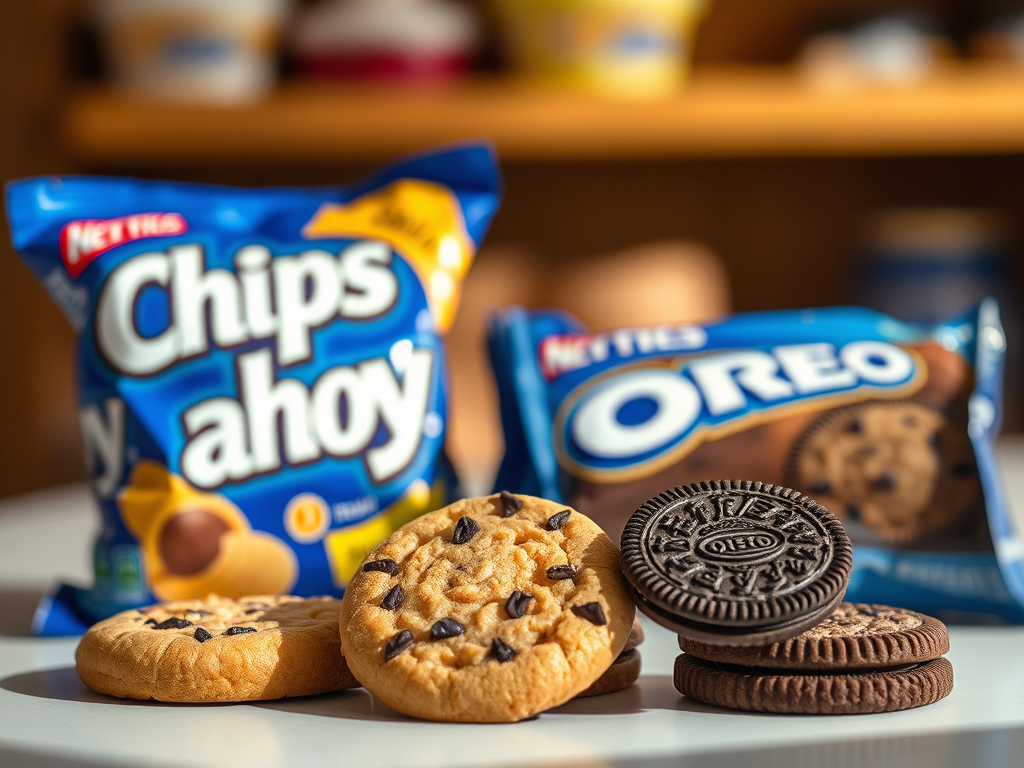
For example, a company will create thin cookies like Oreo Thins. It’s not necessarily because people want an innovative Oreo, but because these companies realize that people are trying to cut back on their consumption similar to the discontinued 100 calorie packs and there are 2 types of people that are going to buy them.
1: Those cutting back on calories yet understand a serving size and appreciate the volume of four thin cookies instead of two full double stuffed oreos.
2: Those who don’t understand that calories still matter no matter the size of the cookie and will purchase them but still over eat the package.
For some, it’s psychological where they think, “Oh, these are thinner, I don’t have to worry about the calories, which means I can eat more of them.”
This has been known to happen with foods that have been labeled Fat Free, Sugar Free, or low. However, no matter the label, calories have to be taken into consideration, and empty calories are still there no matter the pretty packaging or how thin something is.
This doesn’t mean we can’t enjoy all foods including Oreos; on the contrary, all foods are good to have in moderation. But knowing the marketing, nutrition label, and our own tendencies can help us have a better relationship with all foods while taking care of our bodies and wallet.
Convenience vs. Health: The Struggle with Prepackaged Foods
Number two, junk food is often seems cheaper at face value for where it’s the only affordable and accessible option for those living in food deserts. Even for those who don’t live in a food desert, junk food seems cheaper than eating healthy because it’s shelf-stable, whereas fresh produce goes bad within a few days to a week.
If your only shopping option is Walmart, which often has iffy produce, you’re kind of out of luck. Unfortunately, with many so-called health experts spreading false narratives about frozen and canned vegetables, too many give up on trying to eat healthy.
It’s easier to feed yourself and your kids Kraft mac and cheese because boxes are like $0.50 versus buying a bag of noodles and the other ingredients that also require additional effort. If someone doesn’t know how to cook or doesn’t look at cost per unit, the box of mac and cheese just seems like a low-cost effort with finances and time.
There’s not much thinking behind it: you just grab a box, boil some water, cook the noodles, drain the water, add some milk and butter (or skip one if you don’t have it), and then add the cheese. It’s a no-brainer for a lot of people who are always working and tired and just want to feed their children and it’s cheap.
However long term it isn’t cheaper because the potential medical bill far exceeds what savings we garner through our groceries when disregarding our health.
This is where I might argue for repetition of meals such as rice bowls for lunch, it doesn’t take much effort to put rice in a pot, open up a can of corn, black beans, a jar of salsa, some cheese and sour cream.
Another easy rice bowl is cutting up cooked chicken breast, adding some olive or canola oil to a skillet, add minced garlic, frozen vegetables, chicken, small amount of low-sodium soy sauce, 1-3 tsps of sugar, chopped green onion, for a fried rice dish.
Understanding Your Food Choices and How Much You Are Consuming
Again, companies know that most Americans are tired and will grab whatever seems easier in the moment. If you’re a single mother who’s always working and tired, they know that anything pre-packaged and appealing to both you and your kids can make them money.
Being tired and wanting to put less effort into decision-making has weakened our connection to our food choices and understanding just how much we consume in calories vs. volume.
For example, many often struggle with understanding why they’re gaining weight or not losing it when they don’t ‘eat much,’ in their understanding but their favorite go-to for lunch is McDonald’s to grab a McChicken, a large fry, and a soda.
It seems like it’s not that much, but a McChicken is 400 calories, a large fry is 390 calories, and a large soda is 380 calories. If you don’t get diet soda, that is over half of your daily calories, depending on your height and activity level.
If that’s your lunch, you still might have a snack in the evening, then dinner, and you might have dessert. By then, you’ve consumed 2,000 calories or more. People have lost the connection between calories and the amount of food being consumed.
When you’re buying prepackaged food, it takes away your mindful connection to what you’re putting into your body, which has proven detrimental long term because a great percentage of Americans are sitting than being active, so our intake of calories is often in a caloric surplus.
Making Smart Choices for a Healthier, Wealthier Life
Going back to what I found in my personal life: the correlation between snacking and savings is that the fewer calories I consume or spend on snacking, the more money I save.
Chips, cookies, and other packaged snacks are not only high in calories but also costly and addictive. You want more because your body becomes accustomed to having them.
Prepackaged foods like frozen meals are also high in sodium and saturated fat, and you’re consuming more calories over the long term as they tend to be higher in calories per serving.
When you make things at home, you can control the sodium, you can control what’s in your food, and the cost per unit is lower. The calories are often lower too. I also found that if I add an additional step making things less easy consume from a package saves me not only calories but dollars over time.
For example, when I buy cookie dough, I tend to do better with it because, first I have to take steps to get it in the oven which can also add additional timing, sometimes I find the craving as gone away during the time it takes to preheat the oven and or that I am too tired to even bake the cookie dough.
When I do end up baking a couple I find the cookies themselves are often so rich that I just want one or two, and that’s it and that satisfies my sweet tooth.
On the other hand, with prepackaged cookies you can just grab from the pantry, if you don’t want to cook or you’re too tired, you grab a couple at first, then a couple more. Next thing you know, you’ve eaten half a pack because they are readily available.
In doing so, you’ve consumed a majority of your calories for the day, a $6 pack of Oreos, and now your body is craving excessive sugar. Just like with caffeine, it’s hard to adjust to having less.
So, you either go through sugar withdrawal or buy more sugar. This cycle continues just like a caffeine addiction.
Sources:
National Institute of Diabetes and Digestive and Kidney Diseases – https://www.niddk.nih.gov/health-information/health-statistics/overweight-obesity
Sources: Harvard T.H Chan School of Public Health– https://www.hsph.harvard.edu/obesity-prevention-source/obesity-rates-worldwide
An interesting take on Oreo thins and the guilt people feel towards the full stuffed cookies causing them to spend more for less – https://www.psychologytoday.com/us/blog/go-stop-signals/201508/oreo-thins-paradox-why-people-pay-more-less
Note: I started feeling unwell while editing this so if the editing is choppy for some sentences I apologize.
 The Broke College Student
Leave a comment