In a world where everything is rushed and we treat time as our enemy, I had found myself utterly drowning in the toxic hustle culture narrative.
It wasn’t until I was mentally exhausted to the point that I couldn’t write another single blog post, another Kindle Direct Publishing eBook, or a piece of website content that I convinced myself that there was a better way to get results.
I went back to the drawing board to find out if all the hustle culture hogwash about burning the midnight oil, sacrificing sleep, and waking up at 5 am was the only way and best way to build my goal life.
It turns out it wasn’t.
I added the goal to read five personal development books that would change my methods. The five I chose were…
- Atomic Habits.
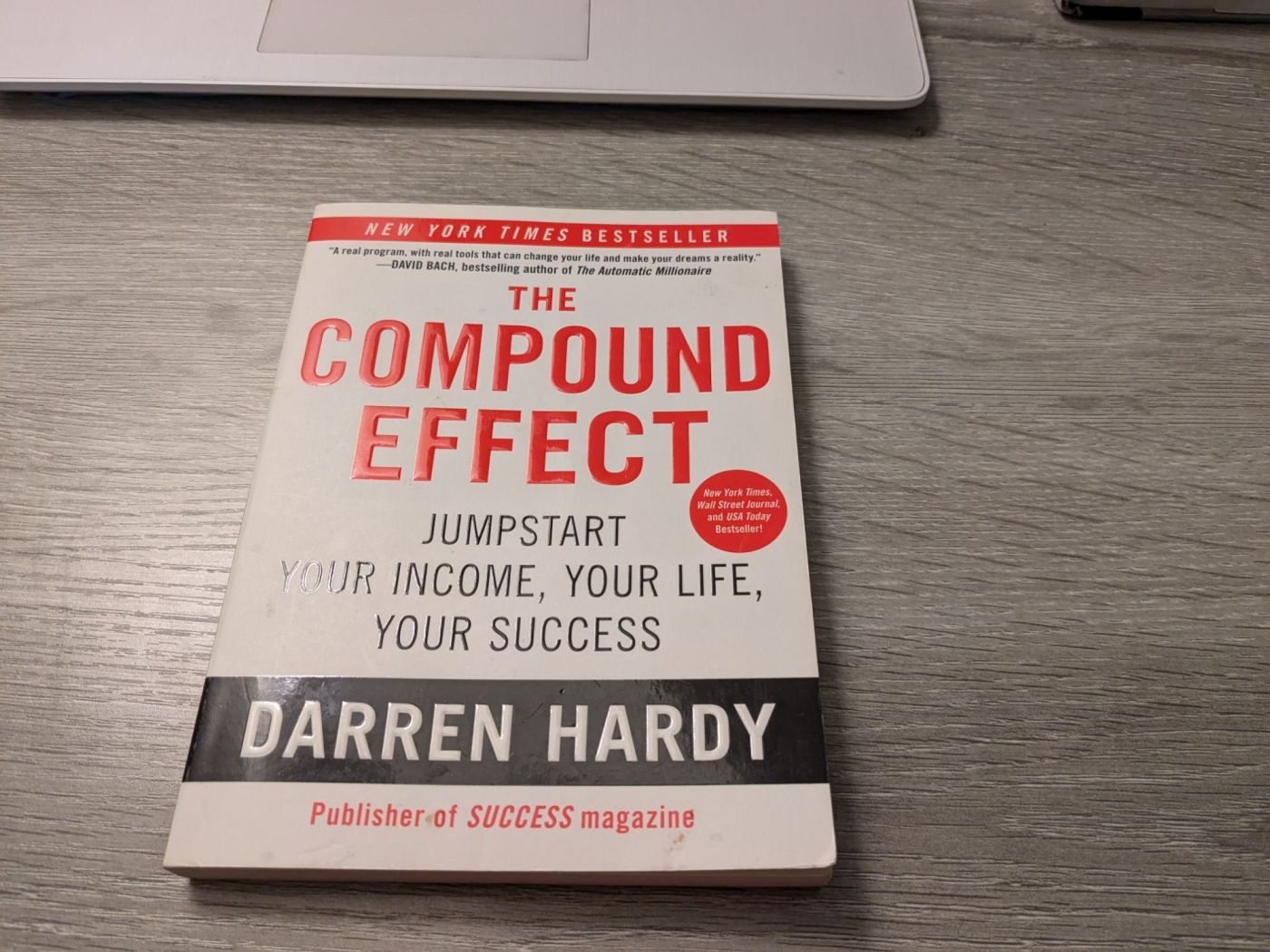
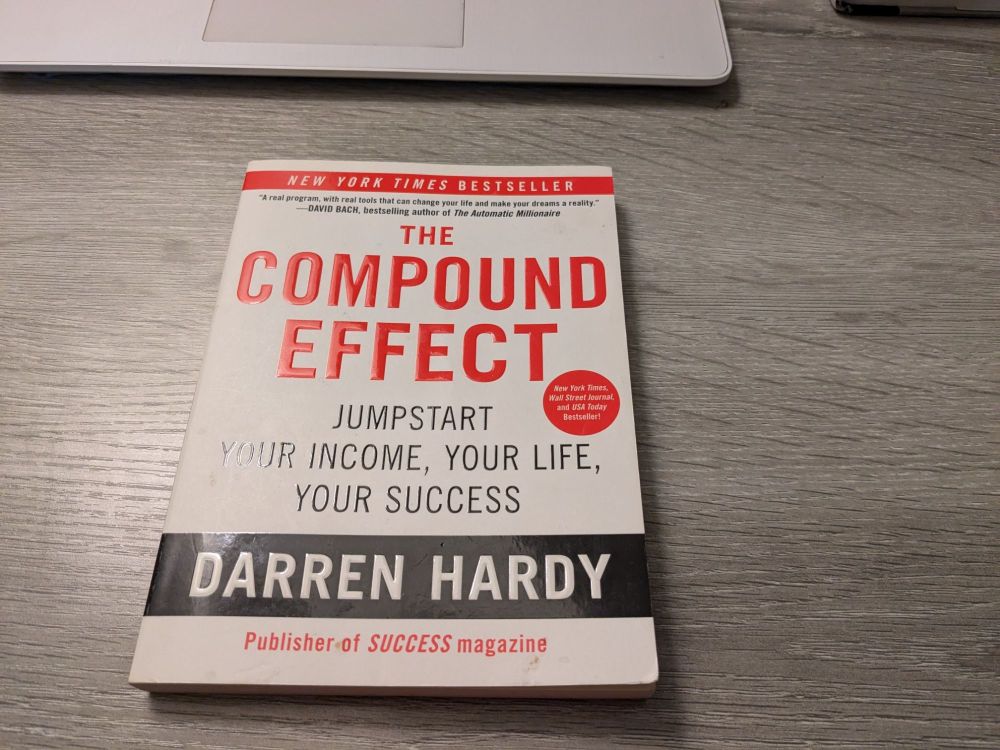
- The Compound Effect.
- The Alter Ego.
- The 50th Law.
- How Rich People Think.
Out of those five books, The Compound Effect had the most positive effect on my life, and here is why.
The myth of thinking we need a home run.
In the book, there is a section where author Darren Hardy talks about how Americans are known for their home run efforts. Want to lose weight? We set the goal to hit the gym seven days a week. Want to start a blog? We set the goal to write seven days a week.
Each time we set a goal, we go with the thought process of hitting a home run with full-on beast mode. We trick ourselves into thinking that we have to go full throttle right out the gate.
That is until the burnout starts, and suddenly we are back to square one, telling anyone that will listen how hard it is to meet our goals.
Here is why that kind of thinking is wrong.
We all have heard that it takes thirty days to change a bad habit or create a new pattern. So, naturally, it makes sense that we would go full-on beast mode for thirty days.
But what happens is after those thirty days are up, we get frustrated with the lack of results, and we get into our heads.
We think we wasted time even though we built up a good habit. Of course, we then fall right back into our old habits because we used up our energy quicker than we needed to.
See, what we often fail to realize is that developing the habit, in the beginning, is just one side of the coin.
It is just one part of the equation.
The other two parts are Time and Compounding.

Why Time and Compounding beat the home run effort every time.
When we set out with the method of time and compounding, there is no unsustainable rush to accomplish our goals.
Time and Compounding will always beat the toxic narrative of hustle culture.
Instead, we allow those two to do the heavy lifting, and all we have to do is show up.
For example, I spent the previous six months focused on losing weight last year. I had been obese for a better part of adulthood with many failed weight loss attempts.
However, this time, I gave myself permission to show up with a plan and let time and compounding do the heavy lifting.
I gave myself a caloric goal M- Sun and a 7,800 step plan to be executed M-F, and that was it.
Set the habit and execute.
I came up with a walkable route around my neighborhood and stuck to the caloric goal even when the results were minimal at best.
I did that for six months and allowed time and compounding of my actions to do the rest. As a result, I lost forty pounds and hit a weight I hadn’t seen since high school.
There was no hustle to get to the gym and no focus on a certain number of pounds that needed to be lost under a specific time frame.
When we allow for time and compounding to be the method we choose, we aren’t driven insane to do more than we could handle.
Instead, it allows us to be who we are with the amount of responsibility we already shoulder.
What compounding is, is consistency in doing something over and over while allowing time to chip in.
There is a quote attributed to Einstein, where he is quoted saying “Compound interest is the eighth wonder of the world.”
Indeed, it holds.
I found myself applying the concept to other problematic areas in my life, such as finances.
They have tremendously improved.
Each time I have gone with the method of Time and Compounding over the hustle culture narrative, I have found far more success.
I don’t wake up early anymore; sometimes, I sleep in.
I don’t sacrifice time with family and friends like I used to.
I don’t push out a bunch of content for max quantity.
Instead, I set out each time, knowing that if I set a simple plan and execute, compounding my efforts over time will give me better results.
And I will be applying it here as I write articles.
Going this route each time makes my mental health better and my thinking clearer, and I am not overly on the edge of burnout.
Right now, I am seriously investing in my financial future, and this method once again is proving to be the best way to go.
The Compound Effect Part II: Shifting to Long-Term Thinking
(This was previously another article on the book. I am integrating it here.)
This time around, I am writing about how long-term thinking has worked for me in a world where anxiety is rampant, and everything feels like it needs to be accomplished now.
Thanks to instant gratification, short-term thinking has become a contagious thought process that has taken from us more than it has given.
There was a time when I felt that things needed to be accomplished within a specific timeframe, or the world around me would fall apart.
Oh, how I was proven wrong.
When I started using the mental model of compounding, I found my behavior changing on how I went about accomplishing my goals, and my anxiety improved significantly.
The behavior change that came from thinking long term.
When you think long-term over the short term, you can develop a more sustainable plan that works just for you.
For example, over the previous year, I grew my net worth by $7,000, and that wouldn’t have happened if I didn’t focus on the long term.
For that kind of growth, I had to focus on five to ten years out and not just the foreseeable months in front of me.
Before I had a grasp on my finances I would get stuck in the short term cycle of thinking and would make goals that weren’t realistic for me. Thus, feeding my anxiety.
Quickly, I realized that setting unrealistic goals in a short amount of time with the limited resources I had was setting me back.
I would set goals like “ I want to save $1,000 in two months”, even though my income at the time wouldn’t allow me do such a thing without suffering a bit. But nevertheless, I would save that $1,000 in two months, but what happened after is I would then spend most of it because I neglected other areas of life and the cycle would continue.
It was vital for me to get out of survival mode and have solid ground for once.
Survival mode breeds short-term thinking because rarely can we see past the end of the month, let alone the end of a year when all we are trying to do is survive.
But, I needed to change fast if I wanted to see a difference, so in 2018 I set out to reinvent myself and find better methods that would work for the kind of person I wanted to become.
Around that time, I read dozens upon dozens of articles and self-development books.
I came across specific blogs like Joshua Kennon ( You’ll probably find me reference him more than once on here, you have been notified) and Farnam Street.
While reading those two blogs, I kept coming across the same concept: long-term thinking has been lost amongst us in a world of instant gratification, and short-term thinking needs to be buried if you want the results you desire.
After fourteen months of printing, highlighting, reading, and then rereading articles mainly on those two sites, I found myself implementing behavioral changes, and setting goals that were realisic for me in the long term.
So, how did I manage to grow my net worth by $7,000 in 2021?
Well, that $7,000 came from two years of hard work before it appeared on my household balance.
2019: I learned how to budget each month, and I became brutally honest about my spending habits.
2020: I started my investment journey and accumulated shares during the March stock market crash and continued to do the same month after month.
I still budgeted on the same income and didn’t eat out or shop for things I didn’t need, which allowed me to throw spare change into my brokerage account, growing it to $4,000.
Around that time, I found that I loved being a minimalist; this is a worthy path for those that want to achieve financial freedom and are willing to think long term.
2021: I continued to budget and put back what I could realistically into my HYSA ( High Yield Savings Account) and Brokerage.
With the combination of budgeting, saving, and investing, the last two years led to $7,000 for 2021.
Gone are the days when short term thinking was at the forefront.
So, how does compounding figure into all of this?
When you think long-term, you naturally allow compounding to work for you, especially if you are conscious about your decisions.
As humans, we know that if we don’t consciously watch what we eat, the scale will inevitably go up because the nature of compounding is always in effect.
If we don’t consciously become aware of our finances, our bank accounts will dwindle, and our debts will accumulate.
Compounding is always in motion; it will work for us as much as it will work aganist us.
So why not take advantage of it with small behavioral changes over the long term?
Shift your thinking and plan things out over the next year with personal steps that you can take.
As tough as it sounds, getting out of survival mode requires long-term thinking, even though the short term is stubbornly present.
When I became honest about the situation I found myself in and that short-term thinking was not serving me, I made the shift, and yes, in a world of instant microwave results of gratification, years can seem like decades.
But once you break things down and make a plan that is sustainable for the long term, no matter how silly it might seem, you’ll thank yourself down the road for not giving up.
You’ll find the brilliant nature of compounding as a friend, and thinking for the long term will come naturally.
Note: I deleted this on Medium from the days when I would document my journey on there. I wrote this on Jan 25th, 2022. But now republishing it on here 8/23/2024.
 The Broke College Student
Leave a comment