When I first started my journey to understanding wealth, I got my hands on all the financial books I could find, including those that now read like a conman had written them. In the beginning, I didn’t know what to look for. I just knew one thing: I wanted to be well-off. It wasn’t until my mid-twenties that I discovered which financial mentors suited my personal taste in wealth and which didn’t.
Turns out, Robert Kiyosaki didn’t.
Why Rich Dad Poor Dad Didn’t Click
Even when I first picked up his book, I remember feeling a bit off about it. Maybe it was the purple cover, the way his picture gleamed back at me, or the fact that he had co-written books with Trump before Trump became president.
Either way, neither of those books sat well with me—not because the content was bad, but because I couldn’t pinpoint exactly what I was being offered other than the same concepts repeated over and over.
The Books That Changed Everything
It wasn’t until I came across books like The Compound Effect and The Millionaire Next Door that I found what I was truly looking for. Furthermore, How Rich People Think was another great one. But if you asked me for a single recommendation, I would say read The Psychology of Money. It sums up all those books in one—except for The Compound Effect, which I think you should still read on its own.
The reason I don’t read Rich Dad Poor Dad or recommend it is because it’s often associated with MLMs and those whose mission seems to be cheating people out of their money at any cost. Robert Kiyosaki, it turns out, isn’t the best person of character to learn from. That said, this depends on your criteria for judging someone’s character.
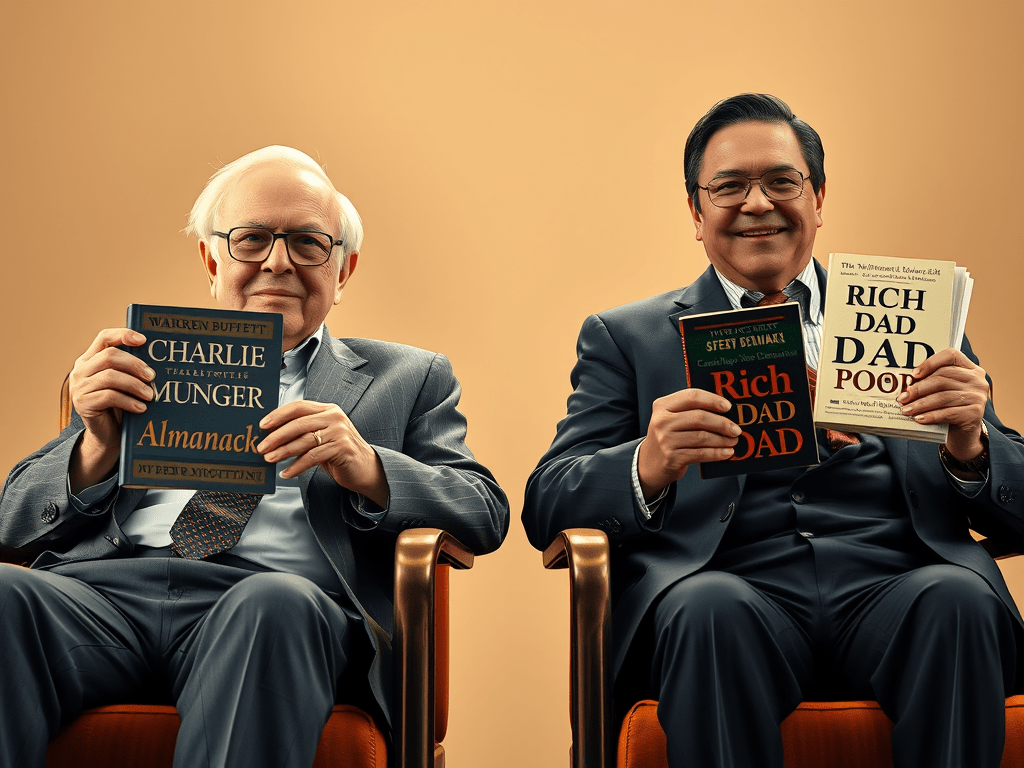
For me, I’d rather learn from the likes of Charlie Munger, Warren Buffett, and Joshua Kennon—plain-vanilla investors, no pun intended. There’s no glossy marketing on their books or overpriced courses waiting to be sold. There are no social media accounts filled with doomsday predictions or panic-riddled warnings to buy gold before the sky falls.
Investing Without Gimmicks
As a young 20-year-old, I couldn’t always tell the difference between a grifter and a wise, seasoned investor. I knew of Warren Buffett, but investing seemed intimidating and far removed from the world I grew up in. However, now it’s a world I’m deeply a part of, and it feels like home. So much so that when I’m not investing, reading, or listening to works by the men I mentioned earlier, I feel homesick.
I didn’t get that sense of connection or belonging from Robert Kiyosaki’s Rich Dad Poor Dad, or his other works and I’ve never heard my personal mentors recommend his work either. Instead, they recommend Peter Lynch, whose book One Up On Wall Street is often regarded as the #1 must-read for building wealth without panic-inducing gimmicks.
If you asked me how to get rich—or, better put, how to become well-off through investing—I would recommend Peter Lynch’s One Up On Wall Street. For mindset, I’d recommend two books: The Psychology of Money: Timeless Lessons on Wealth, Greed, and Happiness by Morgan Housel and The Compound Effect by Darren Hardy. These are especially useful if you’re starting from the bottom, as I did.
I’d also suggest reading Joshua Kennon’s work. He’s a private investor who now manages a $120+ million global investment fund with his husband. (If those last two words made you roll your eyes, perhaps you shouldn’t read this blog.) Additionally, watch as many Warren Buffett and Charlie Munger clips as you can to get familiar with the lingo.
Conclusion: Choose Your Mentors Wisely
When I first started watching clips of Buffett and Munger, their words felt foreign, like rambling. Two old white guys nearing the end—it was hard to make out their lingo on top of the occasional rambling. But once you understand the world of investing, you quickly realize these two never miss a step. Even with the cognitive decline that occasionally shows, their wisdom is there for anyone willing to listen. (Charlie Munger has since passed.)
Robert Kiyosaki’s books come across as easy, surface-level reads that don’t require much thought. That’s why Rich Dad Poor Dad appeals to so many adolescent adults. However, those willing to dig deeper and seek long-term, proven knowledge with no gimmicks will do well for themselves—and their future selves.
While many give credit to Rich Dad Poor Dad, I credit authors like Darren Hardy, Joshua Kennon, and others who truly made a difference in my mindset and actions.
 The Broke College Student
Leave a comment