Rediscovering an Old College Paper
While I was cleaning up disk space on my laptop for the latest Windows 11 update, I found this old paper I wrote during my first attempt at college back in 2014. Man, how time flies and paper writing skills improve when you are actively working on them.
CMST 101: My Role Model; the Leader
Who Was William Wilberforce?
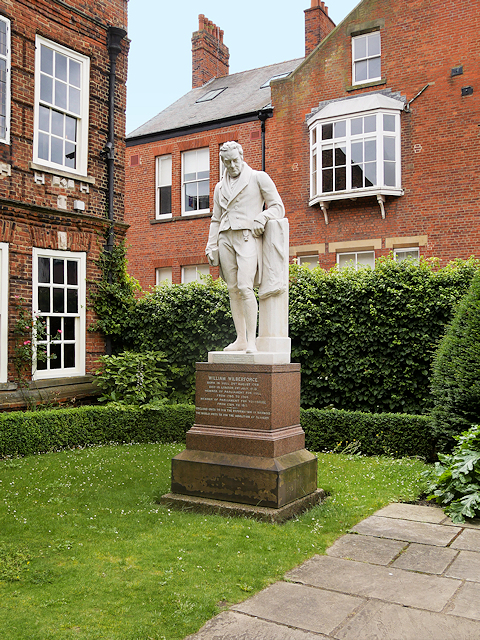
My role model is none other than William Wilberforce, born August 24th, 1759. He was an English politician who worked tirelessly and effortlessly through perseverance to help abolish the slave trade. He was one man standing in the House of Commons fighting for men to be created equal. His leadership skills were presented throughout his ability to get people to listen about the cruelty of slavery. The very people that favored the currency within the linens of their pockets due to their ownership of slave ships and slaves themselves.
The Leadership Qualities of William Wilberforce
He had the ability of persuasion, commitment, and passion to inspire others even when the odds seemed impossible to overturn. The fact he had all of those skills, and then some, is what makes him not only a good leader but a great one at that. His speech still holds power to truth even now in modern times, in which scholars have studied as of lately. Back in the 1700s, speeches were not recorded; therefore, they were sometimes misprinted and misquoted for the reporter’s own political agenda, according to British academic author Carey.
A Powerful Speech That Shaped History
The words following this statement are the first words of Mr. Wilberforce’s significant speech in front of the British Parliament:
“When I consider the magnitude of the subject which I am to bring before the House—a subject, in which the interests, not of this country, nor of Europe alone, but of the whole world, and of posterity, are involved: and when I think, at the same time, on the weakness of the advocate who has undertaken this great cause—when these reflections press upon my mind, it is impossible for me not to feel both terrified and concerned at my own inadequacy to such a task” (Cols 41-42).
The fact that he spoke of his inadequacy in terms of his ability to lead only factors into why he was such an influential leader. A leader that has the passion to withhold trust of the people and not bestow betrayal upon them has the natural makings of an honest leader.
Leadership Theory and Wilberforce’s Influence
According to Bass Bernard’s transformational theory, a leader is one that can inspire and motivate others to perform a task. In most cases, Mr. Bass holds to the theory that leaders assert a type of influence that is referent power that is earned through a charismatic personality (Bass, 294). With that said, Mr. Wilberforce was known to be popular throughout the Commons before bringing abolition to the table.
The Legacy of William Wilberforce
Mr. Wilberforce fought for twenty-six years until the Slave Trade Act passed in 1807. Throughout his campaign, he suffered an illness that eventually took his life on July 29th, 1833. Even after the act was passed, Mr. Wilberforce continued onwards, fighting for other rights, including animal cruelty. His legacy has been upheld by his two sons, and statues have been placed in his birthplace.
Why Wilberforce Is My Role Model
What makes my belief that Wilberforce was a leader is that his love for men being created equal was of such importance that he put aside his personal well-being. Since childhood, he suffered from acute chronic stomach pain, which worsened with the stress of his campaigning. Just like another great leader, Martin Luther King Jr., his love for people—his people—was deeper than himself. He was willing to go to the end and back to abolish the trade, even when many argued that financial ruin would be the outcome if the slave trade was abolished.
The bravery, courage, perseverance, and wisdom of Mr. William Wilberforce are only a few key reasons why he is my role model—the leader.
Final Thoughts
At the time, I had been watching the movie Amazing Grace religiously for inspiration, amongst other movies like The Pursuit of Happyness, which ultimately inspired this paper. It’s interesting to see how far I have come, and even though I have many role models, he continues to be one of them in how I approach injustice and longevity in the fight for human rights.
One could in fact say this paper is more relevant today than the day that I wrote it. Who is the modern William Wilberforce in your eyes?
Lastly, I recently published my paper, The Role of Gender in Workplace Advancement, which I wrote for the Fall Quarter, here on the blog—feel free to check it out!
P.S. Fun Facts About William Wilberforce
- 🏛️ Abolition vs. Slave Trade Act – The Slave Trade Act of 1807 banned the transatlantic slave trade but did not end slavery itself. The Slavery Abolition Act of 1833, which passed just before Wilberforce’s death, officially abolished slavery in most of the British Empire.
- 🤕 Chronic Health Issues – Wilberforce suffered from ulcerative colitis (or possibly Crohn’s disease) throughout his life. Later, he also developed a severe spinal deformity, which left him with a permanently curved back.
- ✊ He Didn’t Work Alone – While Wilberforce was the face of the abolition movement in Parliament, he had strong allies like Thomas Clarkson, Granville Sharp, and the Clapham Sect, a group of evangelical reformers who fought alongside him.
- 📜 His Famous Speech – The speech excerpt in this paper is from May 12, 1789, one of his most famous abolitionist speeches in Parliament. His words were so powerful that they are still studied today!
References
- ‘William Wilberforce’s Sentimental Rhetoric: Parliamentary Reportage and the Abolition Speech of 1789’, The Age of Johnson: A Scholarly Annual, 14 (2003), 281-305
- http://www.brycchancarey.com/abolition/wilberforce2.htm
- Bass Bernard. Communication Studies, Tacoma Community College, Second Custom Edition. Pearson. (2013) Pages 294-295
 The Broke College Student
Leave a comment