Ever noticed how some imported goods are way more expensive than expected? Or why trade wars make headlines like the latest celebrity scandal? Meet tariffs, the silent force behind price hikes, economic shifts, and international disputes.
Tariffs may sound like something only economists care about, but they affect everyone. Whether you’re a college student buying a new laptop, a business owner sourcing materials, or just someone trying to save money at the grocery store, tariffs play a role in shaping what you pay.
In this article, we’ll break down:
- What tariffs are and why they exist
- The history behind them (spoiler: they’ve been around forever)
- How they impact businesses, consumers, and the global economy
- Whether they’re good or bad (hint: it depends on who you ask)
Let’s dive in.
What Are Tariffs? (Breaking It Down Like You’re 5)
A tariff is essentially a tax placed on imported or exported goods. Think of it as a cover charge a country imposes on foreign products entering its market.
Analogy: The Cupcake Shop and the Outsider Baker
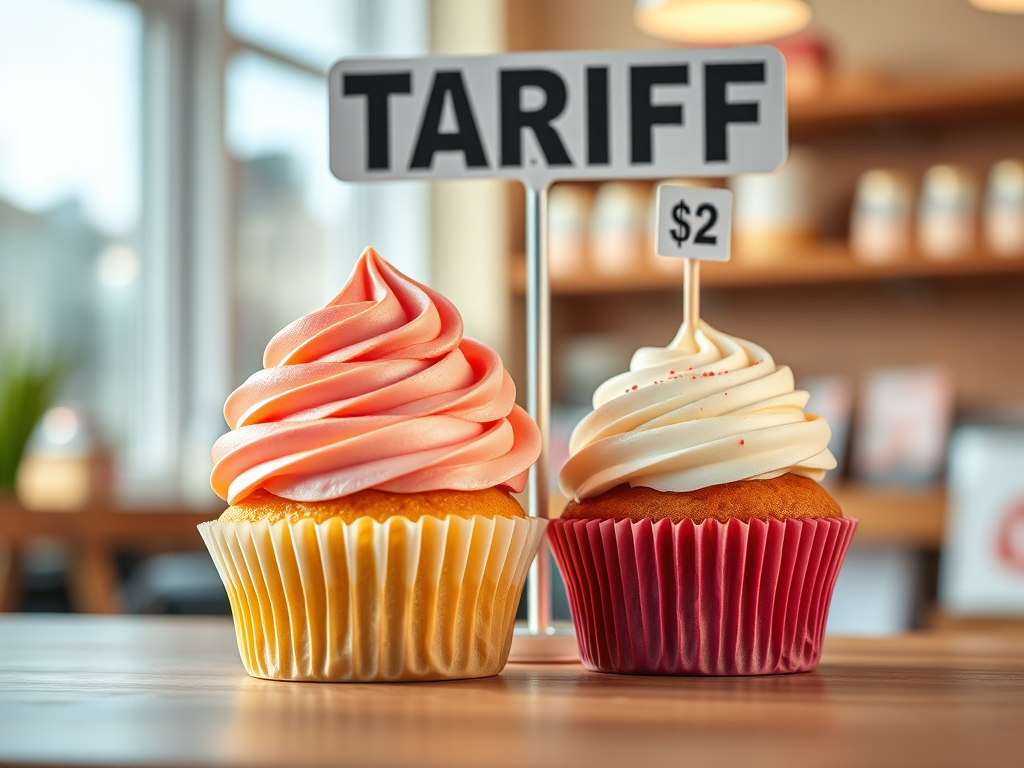
Imagine you own a cupcake shop in a small town. Business is good, and people love your cupcakes, which sell for $3 each. Then, a baker from another town shows up, selling cupcakes for only $2 each. Since they use cheaper ingredients from overseas, they can afford to charge less, and suddenly, your customers start buying from them instead.
To protect your business, the town council decides to put a $1 tax on every cupcake the outsider baker sells. Now, instead of being $2, their cupcakes cost $3, just like yours. This makes your cupcakes competitive again, and your business is safe. That extra $1 goes to the town council as revenue, but the customers end up paying more.
This is how tariffs work. Governments place taxes on foreign goods to either:
- Protect local businesses from cheaper foreign competition.
- Generate revenue for the government.
- Gain leverage in international trade disputes.
Types of Tariffs:
- Import Tariffs – These are the most common and are charged on goods coming into a country. Example: If the U.S. puts a 20% tariff on imported French wine, that wine becomes more expensive for American buyers.
- Export Tariffs – Less common, but some countries tax goods leaving their borders. Example: A country that produces a lot of oil might tax its oil exports to keep domestic prices low.
- Ad Valorem vs. Specific Tariffs:
- Ad Valorem Tariff: A percentage of the item’s value (e.g., 10% of the item’s price).
- Specific Tariff: A fixed fee per unit (e.g., $5 per imported T-shirt).
Now that we’ve covered the basics, let’s look at how tariffs have shaped history.
A Brief History of Tariffs (Because They’ve Been Around Forever)
Tariffs aren’t a new thing, they date back thousands of years. Ancient civilizations, from the Roman Empire to the Ottoman Empire, used tariffs as a major source of revenue.
Key Moments in Tariff History:
- The American Revolution (1770s): Tariffs on tea and other goods (hello, Boston Tea Party) fueled tensions between Britain and the American colonies.
- The Smoot-Hawley Tariff (1930): This U.S. tariff, meant to protect American businesses, backfired and worsened the Great Depression by triggering international retaliation.
- The World Trade Organization (1995-Present): Global efforts to reduce tariffs have led to free trade agreements, but trade wars still happen.
Today, tariffs remain a powerful economic tool, sometimes a double-edged sword.
Why Do Governments Use Tariffs? (Hint: It’s Not Just About Money)
1. Protecting Domestic Industries
Imagine you own a small shoe company in the U.S., but cheap shoes from China flood the market. A tariff on imported shoes makes them more expensive, giving your company a better chance to compete.
2. Raising Government Revenue
In the past, tariffs were one of the biggest sources of government income. Today, they’re less about revenue and more about economic strategy.
3. Political Leverage & Trade Wars
Tariffs are often used in trade negotiations. Example: The U.S.-China trade war involved both countries imposing tariffs to pressure each other into better trade deals.
The Ripple Effect: How Tariffs Affect the Economy from Top to Bottom
Tariffs may start at the government level, but their effects trickle down to businesses, consumers, and even the stock market.
1. Consumers: Higher Prices on Everyday Goods
When tariffs increase the cost of imported goods, companies often pass that cost onto consumers. Example: The U.S. tariffs on Chinese electronics made smartphones, laptops, and appliances more expensive.
2. Businesses: Supply Chain Disruptions
Companies that rely on imported materials (like auto manufacturers needing steel) face higher costs. Some move production to other countries to avoid tariffs, impacting jobs at home.
3. Investors & Stock Markets: Volatility & Uncertainty
Markets hate unpredictability. When major tariff announcements happen, stocks rise and fall rapidly. Investors keep a close eye on tariffs because they can impact company profits and global economic stability.
4. The Global Economy: Trade Wars & Retaliation
When one country imposes tariffs, others often retaliate. This can escalate into full-blown trade wars, slowing down economic growth worldwide.
Example:
- The U.S. imposes tariffs on European steel.
- Europe responds with tariffs on American whiskey and motorcycles.
- U.S. businesses lose European customers.
This back-and-forth can create economic uncertainty for everyone.
Real-World Examples: Tariffs in Action
1. The U.S.-China Trade War (2018-Present)
- The U.S. imposed tariffs on billions of dollars’ worth of Chinese goods.
- China retaliated with its own tariffs.
- American farmers, who export soybeans to China, suffered massive losses.
2. The Boeing-Airbus Dispute
- The U.S. and EU imposed tariffs on each other’s aircraft manufacturers, affecting airline costs worldwide.
3. Steel & Aluminum Tariffs (2018)
- The U.S. imposed tariffs on imported steel and aluminum, claiming national security reasons.
- Result: U.S. steel manufacturers benefited, but industries relying on steel (like carmakers) faced higher costs.
Are Tariffs Good or Bad? (The Great Debate)
Like most economic policies, tariffs have pros and cons.
Pros:
- Protects local businesses from foreign competition
- Encourages domestic job growth
- Can be used as a negotiation tool in trade deals
Cons:
- Leads to higher consumer prices
- Can trigger trade wars, hurting global growth
- Hurts industries that rely on imported materials
Some economists argue tariffs create inefficiencies by interfering with the free market. Others say strategic tariffs help developing industries grow. The truth? It depends on how they’re used.
Final Thoughts: What’s Next for Tariffs?
Tariffs aren’t going anywhere. As global trade shifts, we’ll continue to see countries use tariffs strategically.
What to Watch For:
- Will the U.S. and China ease their trade war?
- Will new free trade agreements lower tariffs worldwide?
- How will tariffs impact inflation and global supply chains?
Whether you’re a student, business owner, or investor, understanding tariffs helps you make sense of economic trends. They may seem like just another tax, but their impact stretches far beyond international trade, they shape everyday life.
If You’re Interested in Learning More About the Economy…
If you’re curious about how the global economy works and how government decisions affect everything from your paycheck to recessions, check out my article on “The Ripple Effect of Recession: How Economic Chaos Hits Home and What You Can Do About It. Recessions don’t just happen in faraway places like Wall Street, they affect all of us. The ripple effect from an economic downturn can touch your life in unexpected ways, whether it’s through job losses, business closures, or even smaller changes in your local community.
This article dives deep into the real-world consequences of recessions, showing you exactly how they can shift from global markets to your backyard. We explore the human side of economic downturns, the importance of preparing for tough times, and practical advice for both individuals with financial flexibility and those living on tighter budgets, like college students.
 The Broke College Student
Leave a comment