If you’ve ever watched Trading Places, you know that commodities trading can be fast, chaotic, and incredibly profitable (or devastating). But what exactly are commodities? Why do people trade them? And how do they impact our daily lives?
In the movie, Eddie Murphy’s character goes from street hustler to commodities trader, learning how the price of orange juice futures can make or break fortunes overnight. While most of us aren’t trading frozen concentrated orange juice (FCOJ) contracts, understanding commodities is essential for grasping how the global economy functions.
In this article, we’ll break down what commodities are, how they work, why they matter, and what happens when their prices rise or fall, all in a way that makes sense, even if you’ve never set foot in a trading pit.
What Are Commodities?
Commodities are basic goods used in commerce that are interchangeable with other goods of the same type. They are typically raw materials or primary agricultural products that can be traded on global markets.
The Four Main Types of Commodities:
- Agricultural Commodities → Wheat, corn, soybeans, coffee, cotton, and, yes, orange juice.
- Energy Commodities → Crude oil, natural gas, coal, gasoline.
- Metals → Gold, silver, copper, aluminum, platinum.
- Livestock and Meat → Cattle, hogs, poultry.
If a product can be bought, sold, and standardized, it’s likely a commodity. In simpler terms, this means that no matter where you buy it, the product is essentially the same. For example, a barrel of crude oil is the same whether it comes from Texas or Saudi Arabia. A bushel of wheat is the same whether it’s grown in Kansas or Canada. Unlike branded products like a Nike sneaker or an Apple iPhone, commodities don’t have unique features that set them apart based on who is selling them.
Example from Trading Places
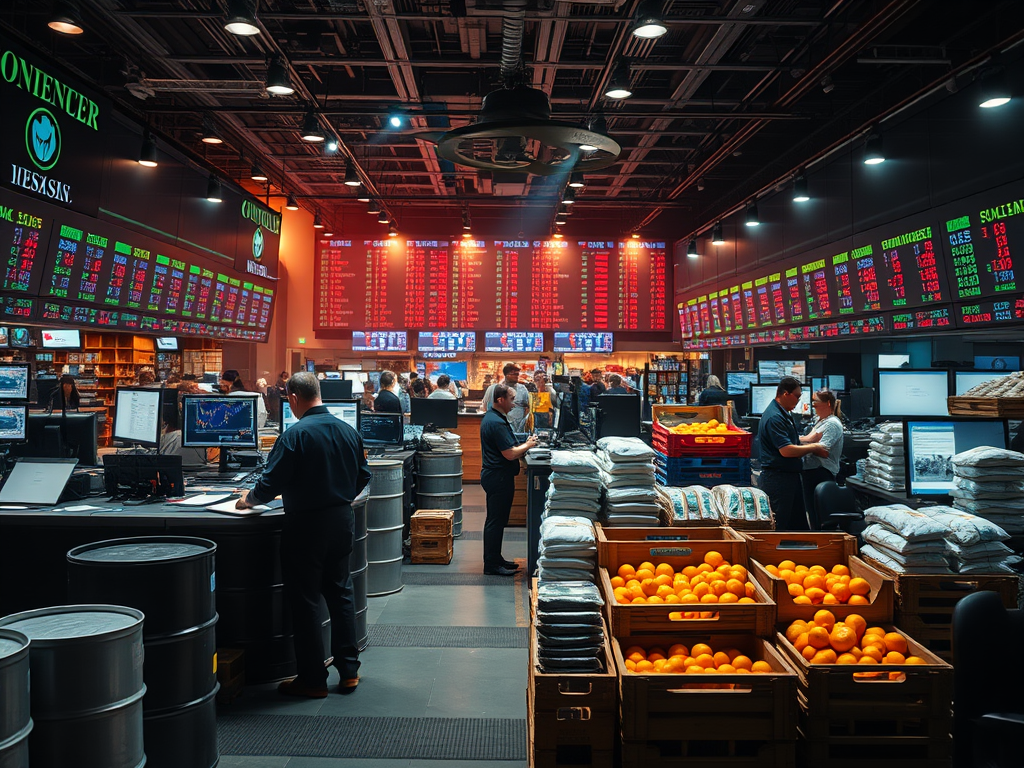
In the film, commodities traders bet on whether the price of frozen concentrated orange juice (FCOJ) will rise or fall. The entire climax revolves around a futures contract trade gone wrong, showing how high the stakes can be in the commodities market.
How Do Commodities Work?
Unlike stocks, which represent ownership in a company, commodities represent physical goods that are traded globally. Prices fluctuate based on supply, demand, weather conditions, geopolitics, and speculation.
How Are Commodities Traded?
There are two primary ways to trade commodities:
- Spot Market (Cash Market) → Buying and selling the actual physical commodity for immediate delivery.
- Futures Market → Buying and selling contracts to purchase a commodity at a set price in the future.
What Are Futures Contracts?
A futures contract is an agreement to buy or sell a commodity at a predetermined price at a specified future date.
- If you buy an oil futures contract, you’re agreeing to purchase oil at a set price next month.
- If you sell a futures contract, you’re betting that the price will go down.
Why Do Commodities Matter?
Commodities impact everything from the price of your groceries to your gas bill. When commodity prices fluctuate, consumers feel the effects in their wallets.
1. They Drive Inflation
- When oil prices rise, transportation costs increase, leading to higher prices on food, clothing, and electronics.
- When wheat prices soar, bread and pasta get more expensive.
2. They Impact Global Economies
- Countries that export commodities (like Saudi Arabia with oil) benefit when prices rise.
- Countries that import commodities (like Japan, which imports energy) suffer when prices increase.
3. They’re Used for Hedging and Speculation
- Farmers hedge by selling futures contracts to lock in prices for their crops.
- Investors speculate on commodities to profit from price movements.
Example from Trading Places
The Duke brothers bet that orange juice prices will rise, while Murphy and Aykroyd bet the opposite. When the price crashes due to a government report, Murphy and Aykroyd profit massively, exposing the Duke brothers to huge losses. This shows how information, speculation, and timing determine winners and losers in commodities trading.
What Happens When Commodity Prices Rise or Fall?
Understanding price movements in commodities helps us anticipate economic trends.
When Commodity Prices Rise:
- Oil Up → Gas prices increase, transportation costs rise, inflation grows.
- Wheat Up → Food prices rise, hitting low-income families the hardest.
- Gold Up → Investors move money into gold as a safe haven, often during economic uncertainty.
When Commodity Prices Fall:
- Oil Down → Gas becomes cheaper, but oil-exporting economies suffer.
- Wheat Down → Food prices drop, which is good for consumers but bad for farmers.
- Gold Down → Investors are more confident in stocks and the economy.
Should You Invest in Commodities?
Commodities trading isn’t for the faint of heart. Prices can swing wildly due to factors like weather, wars, and politics. But for those who understand the risks, commodities can be a profitable asset class.
Pros of Investing in Commodities:
✔ Hedge Against Inflation → When the dollar weakens, commodities often hold their value. ✔ Diversification → Commodities don’t always move in the same direction as stocks, offering portfolio protection. ✔ Global Demand → Growing populations will always need food, energy, and metals.
Cons of Investing in Commodities:
❌ Extreme Volatility → Prices can change drastically overnight due to external events. ❌ Leverage Risks → Futures trading can lead to massive losses if not managed properly. ❌ Unpredictability → Weather, politics, and global crises can disrupt supply and demand.
Final Thoughts: What Can We Learn from Commodities?
Commodities might seem complex, but they are fundamental to how the world economy works. Whether you realize it or not, your daily life is impacted by the price of oil, wheat, gold, and other essential goods.
Key Takeaways:
- Commodities are raw materials like oil, wheat, and metals traded on global markets.
- Their prices fluctuate based on supply, demand, and speculation.
- They impact inflation, global economies, and even personal finances.
- Futures contracts allow traders to bet on commodity prices, sometimes winning big, sometimes losing everything.
Just like in Trading Places, knowing how commodities work can help you understand markets, protect your investments, and even profit when prices move in your favor.
 The Broke College Student
Leave a comment