Most people worry about rising prices, but what happens when prices drop? That’s called deflation. While lower prices might sound like a good thing, deflation can actually signal deeper economic problems. Let’s break down what deflation is, why it happens, and how it affects the economy.
What Is Deflation?
Deflation is the opposite of inflation. It occurs when the overall price level of goods and services falls over time, increasing the purchasing power of money. While this might seem beneficial, after all, who doesn’t like lower prices?, deflation can lead to reduced wages, job losses, and economic stagnation.
Analogy: The Deflating Balloon
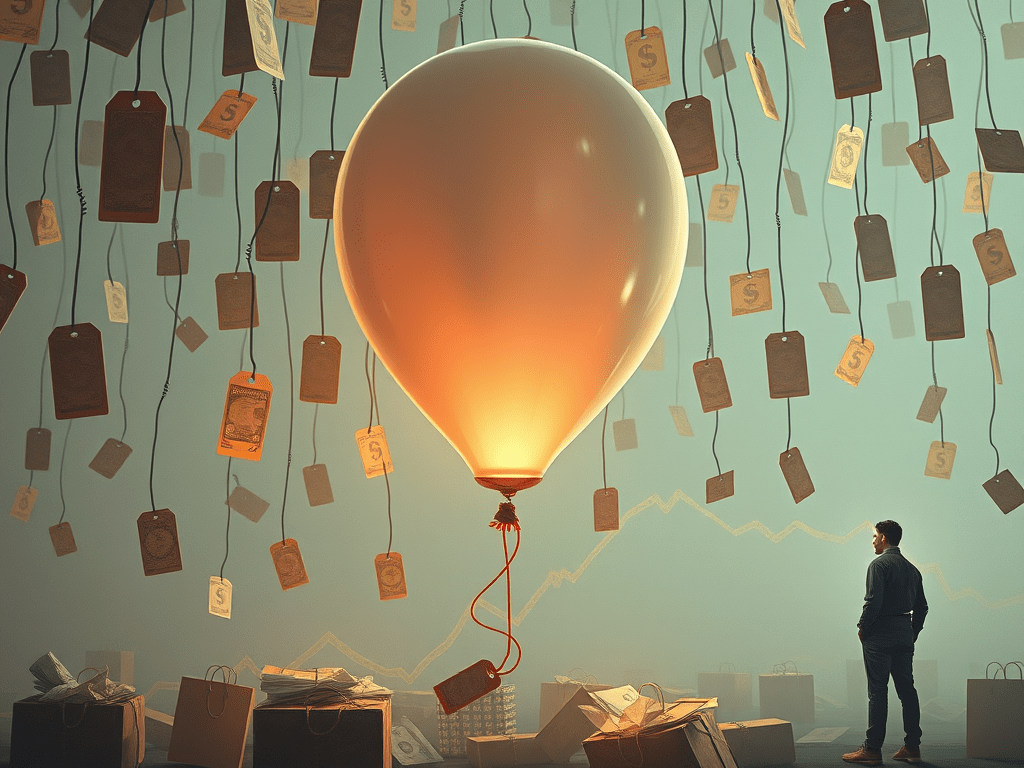
Think of the economy like a balloon. When the balloon is filled with air (money flowing through the system), it expands, and everything functions smoothly. But if the air starts escaping too quickly, the balloon shrinks, and everything contracts. Deflation is like that air escaping—it causes the economy to shrink and slow down.
What Causes Deflation?
Deflation happens for several reasons, including:
- A Decline in Consumer Demand – When people stop spending money, businesses lower prices to attract buyers, which can lead to further economic slowdown.
- Example: During economic downturns, people cut back on spending, forcing retailers to slash prices to entice shoppers.
- Increased Productivity Without Increased Demand – Advances in technology and production efficiency can lower costs, but if demand doesn’t keep up, prices fall.
- Example: If companies can produce more goods with fewer workers, wages might stagnate, and lower wages mean people spend less, contributing to deflation.
- Tighter Monetary Policy – When central banks limit the money supply, borrowing slows, leading to less spending and lower prices.
- Example: If the Federal Reserve raises interest rates too much, businesses and consumers borrow less, reducing economic activity and pushing prices down.
- Debt Crises – When people and businesses focus on paying off debt instead of spending, demand drops, causing prices to fall.
- Example: If a country experiences a financial crisis, households and businesses may cut spending drastically to manage debt, leading to a drop in prices across the economy.
Real-World Examples of Deflation
Throughout history, deflation has affected economies in various ways. Here are some notable examples:
- The Great Depression (1929-1939, USA)
- What happened: After the 1929 stock market crash, banks failed, businesses shut down, and unemployment soared. With fewer people able to spend money, demand collapsed, and prices fell sharply. Farmers struggled as crop prices plummeted, and wages declined across industries.
- Example: A loaf of bread that once cost 10 cents now sells for 5 cents, but because wages are also falling, people still struggle to afford necessities. Businesses make less money, leading to more layoffs, making the problem worse.
- Japan’s Lost Decade (1990s-Present)
- What happened: After a financial bubble burst in the early 1990s, Japan’s economy entered a period of long-term stagnation. Prices fell, companies hesitated to invest, and economic growth stalled. Despite efforts from the government, deflation persisted for decades.
- Example: A worker in Japan finds that while the cost of electronics keeps getting cheaper, their wages have stayed the same for years, making it hard to afford a home or start a family.
- Post-2008 Financial Crisis (USA and Europe)
- What happened: After the housing market crash and banking crisis, the economy slowed down, and inflation rates dropped significantly. In some areas, prices even declined, especially in housing and wages.
- Example: A homeowner sees the value of their house drop by 20%, making it harder to sell or refinance. Meanwhile, businesses cut wages, so even though some goods are cheaper, people have less money to spend.
How Deflation Affects the Economy
Deflation can create a vicious cycle that weakens economic growth. Here’s how it impacts different areas:
1. Lower Wages and Job Losses
- Companies make less money due to falling prices, leading them to cut jobs or reduce wages to survive.
2. Debt Becomes More Expensive
- When prices fall, the real value of debt increases, making it harder for businesses and consumers to pay off loans.
3. Reduced Consumer Spending
- If people expect prices to keep falling, they delay purchases, further slowing down the economy.
4. Business Investments Decline
- Companies hesitate to invest in growth if they expect profits to shrink due to lower prices.
How to Protect Yourself During Deflation
If deflation occurs, here are some strategies to protect yourself financially:
- Pay Off Debt Quickly – Since debt becomes more expensive in a deflationary environment, reducing liabilities early can help avoid financial strain.
- Hold Cash Reserves – Unlike inflation, where money loses value, cash gains purchasing power during deflation.
- Invest in Stable Assets – Some assets, like government bonds, hold value better during deflationary periods.
- Keep Skills Up-to-Date – Job losses can be more common, so having in-demand skills can help maintain job security.
Conclusion
Deflation might seem like a positive thing at first, but in reality, it can cause economic stagnation, job losses, and financial hardship. Understanding why it happens and how to prepare can help individuals and businesses navigate these challenges. While inflation erodes purchasing power, deflation can make economic growth grind to a halt, both require careful financial planning to stay ahead.
 The Broke College Student
Leave a comment