What is the World Market?
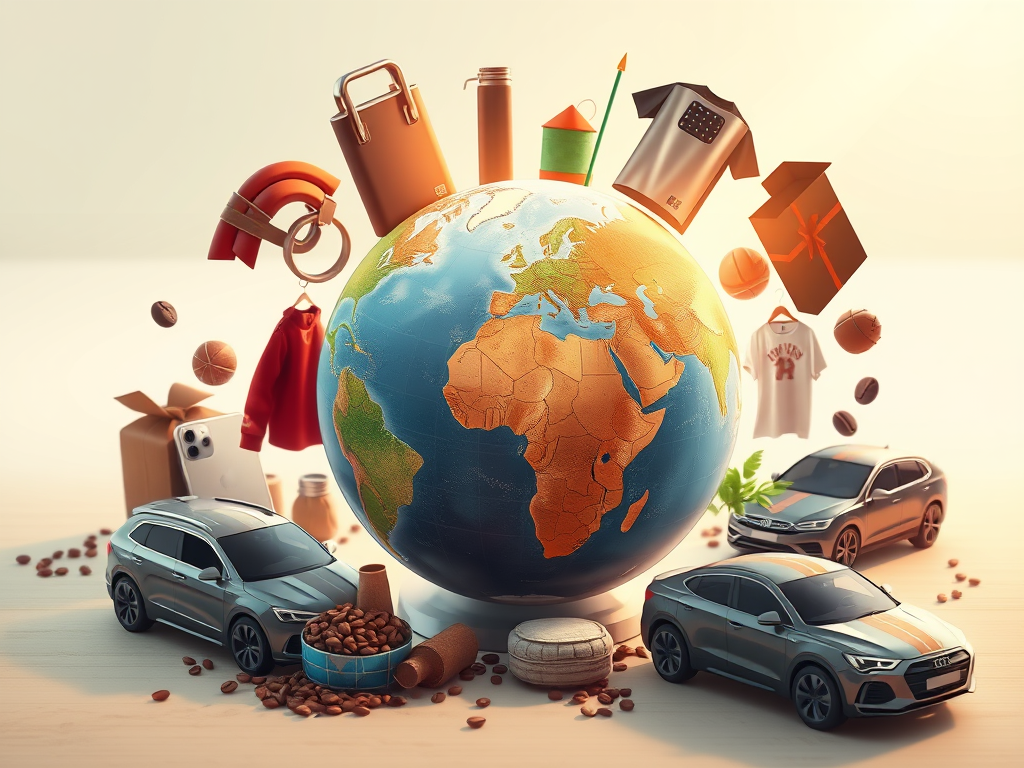
Have you ever thought about how the stuff we buy every day gets to us? From the phone in your hand to the coffee in your cup, most of the products we use are made in different parts of the world. Welcome to the World Market, a vast system where countries exchange goods and services, shaping how our global economy works.
In this article, we’ll explore what the World Market is, how it operates, and why it matters to you. Whether you’re buying a new car or trying to understand the effects of trade wars, understanding the World Market is key to making sense of the global economy.
Relatable Example: The Stuff You Use Every Day
Think about the clothes you’re wearing right now. Your jeans? Maybe they were made in Mexico. Your sneakers? Those might have been made in China. The coffee you drink? Likely from Brazil or Colombia. If you’ve ever shopped on Amazon, you know that these products come from different countries across the globe—and they all end up in your hands through the World Market. It’s like a giant game of “passing the goods” where countries play different roles. Some make the things we want, and others buy and sell them. Simple, right?
The World Market Explained: A Global Marketplace
The World Market is the global system where countries trade goods and services with one another. This exchange happens because no country can produce everything it needs efficiently. Some countries are great at growing coffee beans, while others are awesome at making high-tech gadgets. By trading these goods, nations help each other access what they can’t produce on their own.
Think of it as a huge international shopping mall, but instead of you and me walking around, it’s countries and companies doing the buying and selling. Just like in a regular store, some products are made locally, while others are shipped from halfway around the world.
Relatable Example: Coffee vs. Smartphones
Let’s break it down further. Imagine you’re in Brazil, a country famous for growing coffee. Brazil can grow coffee beans like nobody else, so they do it in huge amounts. But if Brazil wanted to make the latest smartphones, it would struggle because it doesn’t have the technology to do that. On the other hand, South Korea is fantastic at making smartphones. They can design and create high-tech phones, but growing coffee? Not so much.
So, here’s what happens: Brazil sends coffee beans to South Korea, and South Korea sends its high-tech smartphones to Brazil. Now, both countries get what they need without having to do everything themselves. This is the beauty of the World Market.
Why the World Market is Important for Global Dominance
Now, let’s talk about how the World Market affects a country’s global dominance, basically, how a country competes for power and influence in the world economy.
Countries that have strong economies and major players in global trade, like the U.S., China, and Germany, can influence global prices, labor, and supply chains. By participating in the World Market, they can exert economic power through trade deals, tariffs, and influence over international organizations.
For example, when the U.S. enters into a trade agreement with other nations, it has the power to shape how goods are traded, which industries get funded, and what policies should be followed. This can lead to significant influence over not just the economy, but also geopolitical relationships.
Relatable Example: The U.S. and China Trade War
Here’s a relatable story: Picture you and your friend, who both run small businesses. You sell coffee, and your friend sells high-tech gadgets. You’ve been working together for years, each of you relies on the other for certain things. But one day, you and your friend get into an argument, and you both decide to make things harder for the other. You raise the prices of your products, and your friend does the same.
At first, it feels like you’re protecting your business, but then your customers start complaining. They now have to pay more for coffee and gadgets. This is essentially what happens when two big countries, like the U.S. and China, get into a trade war. They slap tariffs on each other’s products, hoping to protect their own industries. But in reality, everyone ends up paying more for the things they want. It’s a lose-lose situation in the long run.
How Tariffs and Trade Wars Impact the World Market
Tariffs are taxes countries place on goods from other nations, and they can dramatically change the dynamics of the World Market. When a country imposes tariffs, it makes products more expensive for consumers. The goal is often to protect local industries from foreign competition, but it can have unintended consequences.
Imagine you’re a small business owner who sells imported goods. Suddenly, the cost of those goods goes up because of a tariff, and you’re forced to raise your prices. Your customers are unhappy because they have to pay more. This is just one of the ways tariffs affect the World Market, they disrupt the natural flow of goods and can lead to less efficiency and higher costs for everyone involved.
Relatable Example: The Coffee Shop and Tariffs
Let’s say you run a coffee shop in the U.S., and you import coffee beans from Brazil. If Brazil’s coffee gets a tariff, the price of the beans goes up, so your coffee shop now has to pay more. You have two choices: raise your prices, which could drive customers away, or eat the cost and make less profit. The same thing happens on a global scale when countries impose tariffs on each other. It messes up the prices and makes everything more expensive for consumers.
Free Market vs. The World Market: How Do They Interact?
The Free Market is a key principle that relates closely to the World Market. It’s the idea that businesses should operate without government interference. Prices, wages, and production should be determined by supply and demand, meaning if people want something, the market should supply it, and prices should adjust accordingly.
The World Market thrives on this free-market principle because countries can buy and sell based on what’s most efficient and beneficial for them. If a country is good at making a certain product and another country wants it, the Free Market allows both parties to negotiate a fair price.
But sometimes, governments interfere with the Free Market to protect their own interests. This can lead to policies like tariffs, subsidies, or trade quotas, which distort the natural functioning of the World Market.
Relatable Example: Buying a Phone in the Free Market
Imagine you want to buy a smartphone. In a free market, you could choose between several brands from different countries, based on what fits your needs and your budget. Let’s say Apple’s iPhone is your favorite, but Samsung’s phone is cheaper and just as good. Because both companies compete, the price of smartphones stays affordable, and the phones get better every year.
But what if the U.S. government decides to add a tariff on all foreign-made phones? Now, Apple’s phones are still fine, but the Samsung phone gets more expensive, and consumers might not have as many choices. The free market is supposed to help keep prices low by encouraging competition, but tariffs can stop that from happening.
How Global Trade Impacts Innovation
One of the coolest things about the World Market is how it encourages innovation. When countries and companies are exposed to new ideas, technologies, and products from around the world, it sparks new ways of thinking and creating.
For instance, in the technology sector, companies like Apple and Samsung constantly innovate because they face global competition. Their phones, software, and designs evolve quickly because they’re competing not just with each other, but with businesses around the world.
When tariffs disrupt global trade, this can slow down innovation. If companies can’t get access to the latest parts or technologies from abroad, they might not be able to keep up with competitors. So, while tariffs might help certain industries in the short term, they can actually harm innovation in the long run.
Relatable Example: Innovation in the Tech World
Think about the smartphone industry. Companies like Apple, Samsung, and Huawei compete fiercely, not just with each other, but with any company around the world that might come up with the next big thing. If tariffs increase and the global supply chain is disrupted, a company like Apple might not be able to get the parts it needs from countries like Taiwan, South Korea, or Japan. This could slow down the release of new, innovative features.
Canada’s Role in the World Market: A Power Player in Energy
Now, let’s shift gears and talk about Canada’s role in the World Market, specifically in energy trade with the U.S. You might have seen news reports about how Canada charges the U.S. for electricity, and this is a great example of how the World Market operates in terms of energy.
Canada has an abundance of natural resources, particularly hydroelectric power, and it’s one of the world’s largest exporters of electricity. A significant portion of that electricity goes to the U.S., especially to states like New York, California, and Michigan.
Relatable Example: How Canada Charges the U.S. for Electricity
Picture this: Canada is like a massive power plant in the north. It generates a lot of electricity from water, specifically from rivers and dams, thanks to its abundant supply of fresh water. Now, the U.S. needs electricity, especially in regions where demand outpaces local supply, so it buys power from Canada. This is not like buying coffee beans; it’s a different kind of product, energy.
The U.S. pays Canada for the electricity it uses. Think of it as a long-distance power line that sends electricity straight to your home. Just like how countries buy and sell tangible goods like smartphones or coffee, Canada and the U.S. trade energy resources through the World Market. This is a good example of how the World Market includes energy trade, which is crucial to both countries’ economies.
Conclusion: The Power of the World Market
The World Market is a dynamic and essential part of our global economy. It’s where countries come together to exchange what they’re best at, and it’s driven by both global dominance and the free market. While tariffs and trade wars can shake things up, the ultimate goal is for countries to cooperate and innovate together, creating a stronger, more efficient system for all.
In a world where we rely on products from all corners of the globe, understanding the World Market helps us see how intertwined our economies are, and how important it is to keep the trade flowing. As global citizens, we benefit from a system that rewards efficiency, fosters innovation, and helps make the world a better place for everyone.
 The Broke College Student
Leave a comment