
Unemployment is a topic that hits close to home for many people, especially when the economy is struggling. We hear about it often on the news, how many people are out of work, how many jobs were created, and what that means for the country’s economy. But do you really understand what unemployment is and why it matters?
In this article, we’ll break down:
- What unemployment is and how it’s measured
- The different types of unemployment
- What causes unemployment
- Real-world examples and how it impacts you and the economy
Let’s dive in.
What Is Unemployment? (Breaking It Down Like You’re 5)
Think of unemployment as a game where everyone is trying to find a job. The people who already have jobs are like players who are “in the game.” The people who are actively looking for work but haven’t found a job yet are like players on the sidelines, waiting for their turn.
Unemployment is the number of people who are on the sidelines and actively looking for a job but haven’t found one yet. It’s a way of measuring how many people are “out of the game,” and it’s an important number to track because it tells us how healthy the economy is. If too many people are unemployed, it’s like the game isn’t going well, and that can hurt the economy.
How Is Unemployment Measured?
Unemployment is usually measured by the unemployment rate, which is a percentage that shows how many people in the workforce are actively looking for jobs but can’t find one. It’s calculated like this:
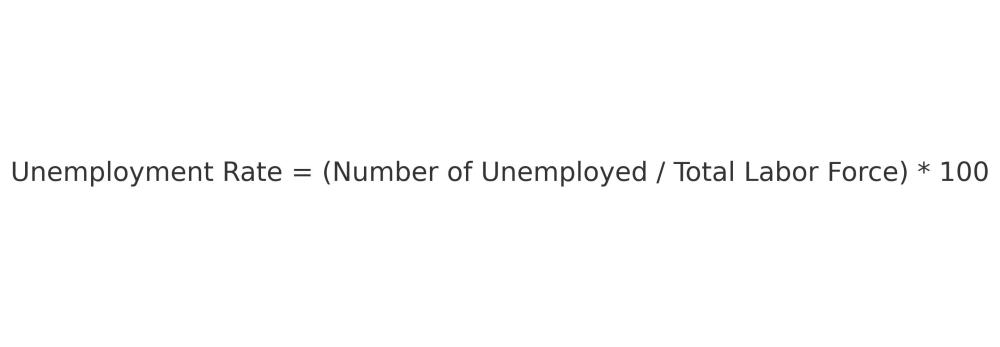
The labor force includes people who are working or actively seeking work. So, the higher the unemployment rate, the more people are out of work and looking for a job.
Different Types of Unemployment
There are different reasons why people might be unemployed, and economists have broken it down into several categories:
- Frictional Unemployment:
- This is when people are temporarily out of work because they’re transitioning between jobs or just entering the job market. It’s kind of like when a soccer player takes a break to catch their breath before jumping back into the game. It’s a normal part of the job market.
- Structural Unemployment:
- This happens when there’s a mismatch between the skills people have and the jobs available. Imagine a factory that used to make VCRs, but now all the jobs are about making smartphones. The workers who know how to make VCRs but not smartphones are out of luck unless they learn new skills.
- Cyclical Unemployment:
- This type of unemployment is tied to the overall economy. When the economy is doing well, people have jobs. But when the economy goes into a downturn, businesses stop hiring, and people lose jobs. It’s like when a roller coaster goes down, everything slows down and gets a bit scary.
- Seasonal Unemployment:
- Some jobs are only available at certain times of the year, like working at a beach resort in the summer or a ski lodge in the winter. After the season ends, the jobs are gone until next year.
What Causes Unemployment?
There are many reasons why people become unemployed, and they can be grouped into a few main causes:
- Economic Downturns:
- When the economy slows down, businesses produce less, and fewer people are needed to work. This leads to layoffs and higher unemployment.
- Technological Changes:
- Sometimes, technology can make jobs obsolete. Robots and automation might take over jobs that were once done by humans, leaving people without work.
- Globalization:
- When companies move production overseas to save on costs, it can lead to job losses in the home country. Jobs get outsourced to countries where labor is cheaper.
- Changing Consumer Preferences:
- When people stop buying certain products, the businesses that make those products may have to lay off workers or close down entirely.
Real-World Examples: How Unemployment Affects You
- The 2008 Financial Crisis:
- During the 2008 recession, many people lost their jobs as the economy crashed. The unemployment rate in the U.S. spiked to over 10% by 2009. People were laid off, homes were lost, and many businesses went under. The ripple effect from that high unemployment was felt for years.
- COVID-19 Pandemic:
- The COVID-19 pandemic caused massive layoffs around the world. As businesses closed or slowed down, millions of people found themselves unemployed. The U.S. unemployment rate spiked to 14.8% in April 2020, the highest it had been since the Great Depression. This showed how quickly unemployment can rise during times of crisis.
Why Does Unemployment Matter?
Unemployment isn’t just a number, it affects everything in the economy:
- For the Economy:
- High unemployment means fewer people are working, which leads to less money being spent in the economy. Businesses can’t sell as much, and the government may have to spend more on things like unemployment benefits and welfare.
- For Workers:
- Being unemployed can cause financial stress and uncertainty. Without a job, people can struggle to pay bills, buy food, or save for the future. It can also lead to emotional and mental health challenges.
- For Society:
- High levels of unemployment can increase crime rates, create social unrest, and lead to greater inequality in society. When large portions of the population aren’t working, it can disrupt social stability.
Conclusion
- Key Takeaways:
- Unemployment is a measure of how many people are out of work and looking for a job, and it can be caused by a variety of factors, from economic downturns to technological changes.
- There are different types of unemployment—frictional, structural, cyclical, and seasonal, and they each have their own causes and effects.
- Unemployment matters because it impacts not only individuals but also businesses and the overall economy.
Understanding unemployment helps us see how the job market affects everything around us, from the economy to personal lives. Whether you’re a worker, a student, or a business owner, the unemployment rate impacts the opportunities available to you and the resources you have.
If you’re interested in learning more about the economy, check out our article on Recessions 101: What They Are, How They Happen, and How to Protect Yourself. It dives into how recessions create unemployment and why understanding economic trends can help you make better financial decisions!
 The Broke College Student
Leave a comment