
My Rule of Thumb
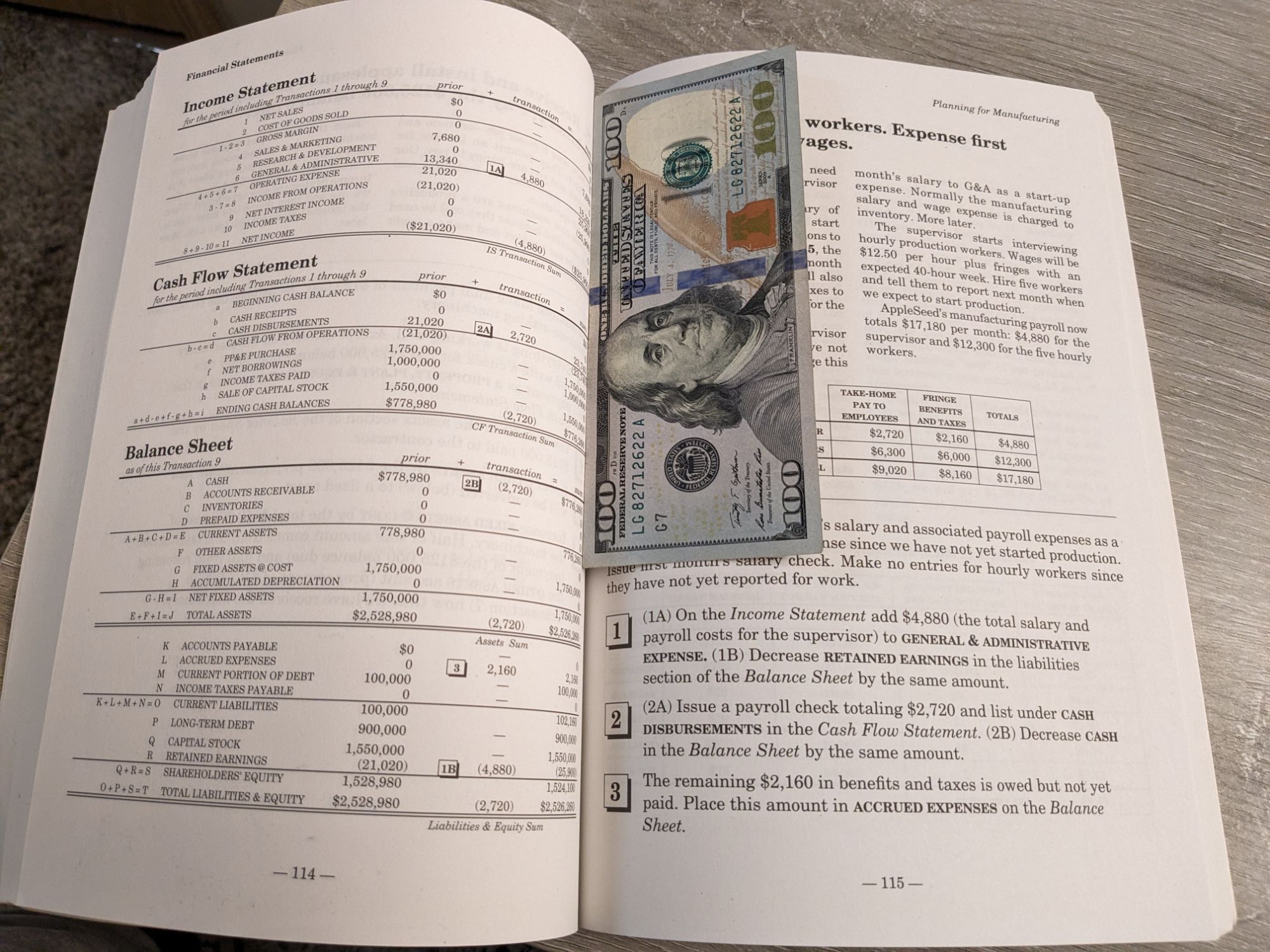
I have this rule of thumb: if I can’t replace something out of savings, or if I can’t replace what I spend within a few months, I don’t spend it. The reason for that is because, over the years, I’ve noticed a pattern with people who get windfalls or lump sums. Whether it’s from taxes, scholarships, grants, anything that feels like a financial boost they don’t usually have, even inheritances, there’s a common outcome.
Being low income and seeing people spend their grants or lump sums, and then a few months later call me up or complain online that they can’t fix their car because it broke down, or they can’t pay their rent, that’s exactly why I don’t spend unless I can replace it. It follows the same principle: if you can’t buy something twice over without it hurting you, then you can’t afford it.
For example, I remember needing to buy my son a pair of shoes. I had the money, but it was the first time I realized I could buy him three pairs and it wouldn’t hurt me. I come from a place where, at one point, I had to put off buying him shoes for a month, and his shoes were too small. I’ll never forget that, because I knew I couldn’t afford them.
Now there are times I’ll just ask him, “Hey, are your shoes small? Are they pinching your toes?” And he’ll say no. But knowing I can buy him shoes at the drop of a hat, and I’ve done it, means everything. Sometimes he’ll say, “They’re getting small,” and I’ve been able to take him to the mall that same day and buy new ones. He likes Vans. He’s not big on Nike or other brands, just Vans.
And Vans usually run between $55 to $70, depending on sales. My point is, I can now buy three pairs of Vans, and it wouldn’t hurt us. I can take the money out of savings, knowing I can replace it within a few months. That’s my rule of thumb.
It’s why I don’t take trips, yet. It’s why I don’t spend thousands, even though I would love to go to Rome, yet. I’d love to see Andrea Bocelli live in Chicago or Boston this year. But I know that taking $3,000 out means I wouldn’t be able to replace that with my income for over a year, or maybe less, but not within a few months. And I think that’s a good rule of thumb.
When you get a lump sum, contrast it against your income and your expenses. Ask yourself: Should I really buy this $2,000 item? Should I really buy anything that costs as much as what I just got in a one‑time check? True story: someone I know got $2,000 in a lump sum. They bought the item, and a few months later, they had money problems, rent issues, everything. Long story short, the item wasn’t worth it after all.
That happened a lot during the pandemic. People bought new PS5s and TVs with their stimulus checks. Then, not even a month later, I saw one of those same people sitting on a sidewalk with another neighbor, counting pennies. That’s when I knew people don’t think far enough ahead.
Maybe it comes naturally to me to plan. Maybe it’s because I’ve studied and observed long enough to see the patterns. But that’s when I realized that no matter how much I want to spend in the moment, I have to contrast that urge with my better judgment, and with my current income. Being low income means I can’t replace large chunks of money I get from grants, for example.
And those grants are a blessing. They’re a small fortune in disguise. And they’re not something I take for granted.
A Practical Warning: Replacing Your Spending
So my financial warning to you is this: always make sure that if you spend something, you can replace it. Because there’s going to come a time when you might need that money back.
Right now, everything is going up, groceries, gas, the price of everything. You name it, it’s rising. And I find myself going to the grocery store even less. Even though I have assets, I have money in savings, and I have no debt, I still find myself going to the store less than some of the people I know who don’t have as much as I do.
I’ve even found myself asking, “How is everyone making it right now?” Because everything’s just so high and expensive. We’ve cut a lot out of our diet. We use coupons like no other. We work the points system like no other. And yet, you still feel that dent in your expenses.
And another thing to look at: when you’re touching savings for things you don’t really think about. You might have $1,000 in savings and say, “Oh yeah, I can take $100 out for this.” But you’ve got to ask yourself: What are you trading off? Because that couple hundred could’ve added to your future cash flow, or your future surplus, whether that’s in cash or investments.
So when you take that $100 out of savings, ask yourself: Are you willing to keep replacing that same $100 over and over every month? Because then you’re not really going anywhere. It’s the same thing if you spend $3,000 on a trip you can’t truly afford. Now you have to build your emergency fund up from zero, which means you’ve set yourself back $6,000.
Because if you think about it, the $3,000 you now have to rebuild could’ve been added on top of the $3,000 you already spent. And this isn’t to stress you out about money. This isn’t to make you think you can’t enjoy life. It’s just to make you think, really think, about how much you spend and how much you’re willing to spend.
If you want to go on that trip, make sure it’s worthwhile. Make sure you’re getting the best deals. Make sure it makes financial sense for you, not somebody else. Not because you saw everyone on social media taking that same tourist trap of a trip overseas, and now you feel like you have to do it too.
This weekend, I went to the Seattle Bite Festival with my child. There was this lumpia bucket I wanted to get. It was worth it, but would I do it again? No. It was $30 after I tipped, for 12 pieces of lumpia and some fresh pork rinds (chicharrones) with sweet chili sauce. It was good.
We also got two Japanese cheesecakes that came out to $20. So overall, I spent $50 on food, and all we got were cheesecakes and lumpia with some chicharrones. Then I went to Whole Foods. We picked up a few things we like to get when we’re in Seattle, it’s a tradition of ours. That came out to $20.
Then I was thirsty, so I bought two Diet Dr. Peppers from McDonald’s. They were flat. Pissed me off. That was $4, and we threw them out after drinking just a little. Even then, that money came from birthday money a family friend had sent us, which was nice.

On our way to the Bite of Seattle 
Space Needle 
It was so crowded. 
First time trying Japanese Cheesecake, so good! Less sweet and very fluffy! 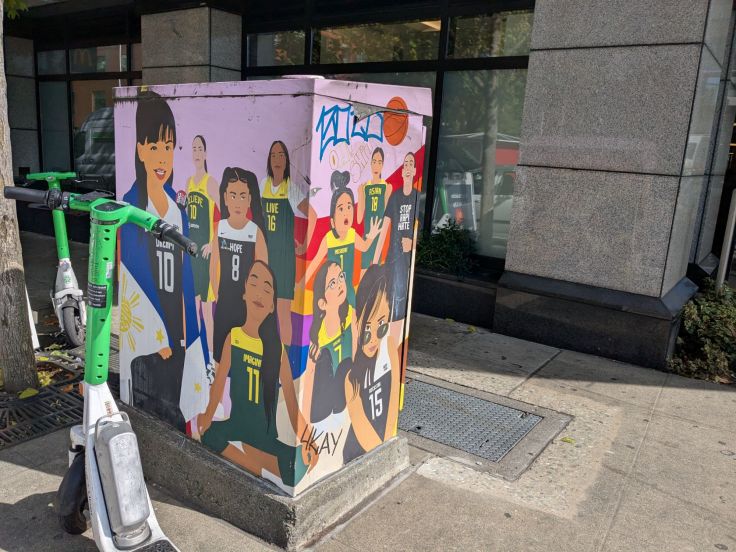
Had to snap this photo, loved the art! 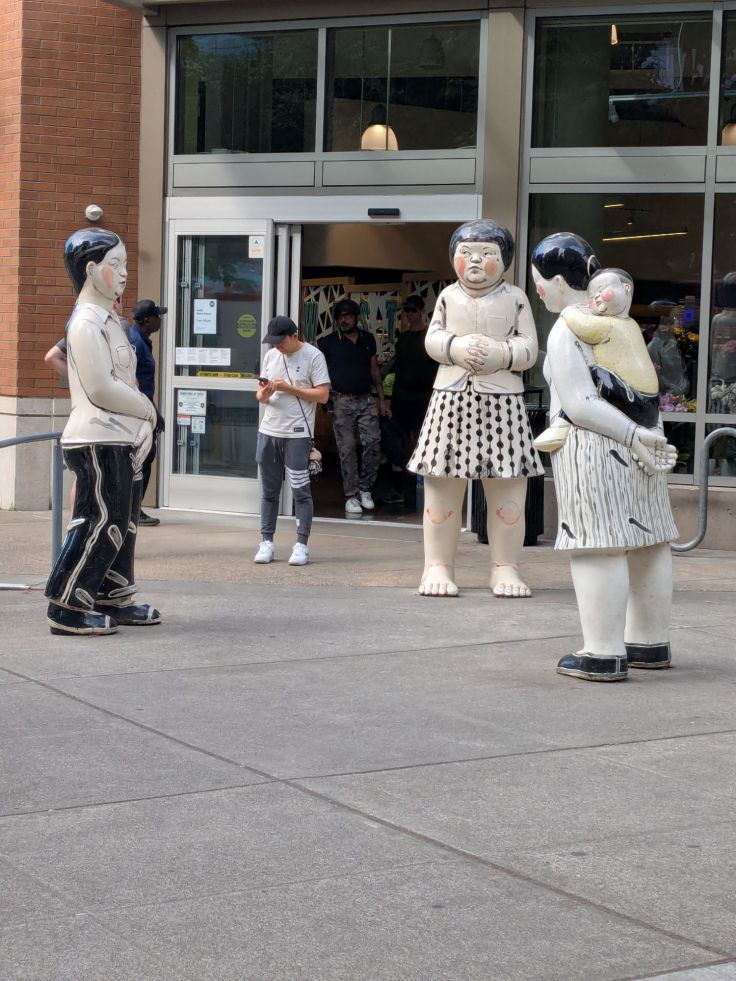
My son thinks these statues are creepy every time we pass them he walks a bit faster. 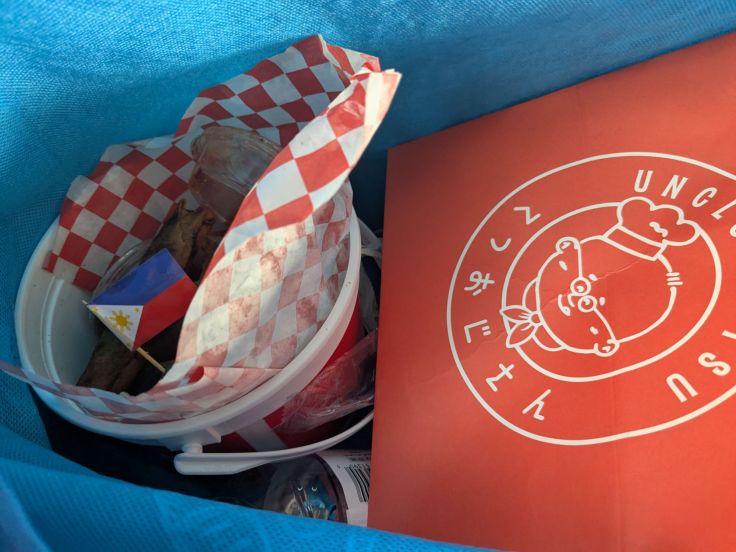
On our way home with the goods. An experience that was worth it at least once.
Then today, I had to go to the grocery store because it’s Monday, which means we reset the week. I touched my savings because I don’t get paid yet. I took out $100, spent only $60, and I have no desire to go to the store again for the rest of the week, except for toilet paper.
Toilet paper was a little more expensive at the store I was at, so I’m going to go to another store where it’s cheaper. It’s a $2 difference, but hey, those $2 add up. So always ask yourself: Can you buy something two or three times over without it hurting you? And if you can, maybe you’re in good financial shape to consider that purchase.
And if you do want to spend a large chunk of your money, ask yourself: How long will it take you to replace it? How many hours do you have to work to earn that lump sum again? When you ask yourself those questions, it sets up a safety mechanism. It stops you from being so impulsive.
This blog is read in 50+ countries (and counting). If you’re a student, teacher, or lifelong learner from anywhere in the world, I’m honored you’re here. Economics belongs to all of us
 The Broke College Student
Leave a comment