
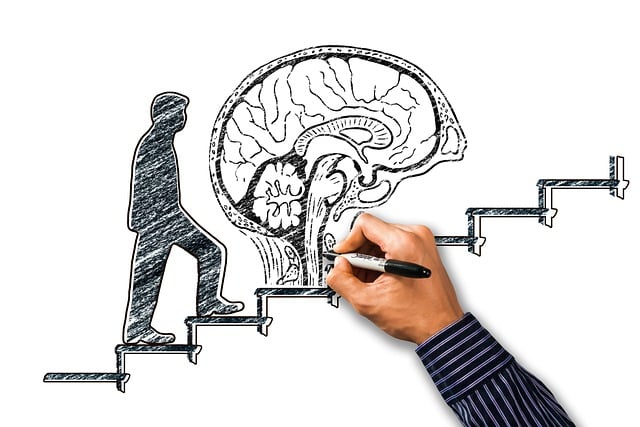
It took me a long time to realize this, and it wasn’t until this quarter of college that I was able to put this together: our comprehension and understanding of material are going to rise and fall upon four distinct factors, not in any particular order…
- Our interest in the subject.
- The tone set by the professor.
- Our time constraints /where we are in our personal journeys.
- Learning styles.
I’ll touch on each briefly before diving into my thoughts.
Our interest in subject matters
Our interest in subject matters is crucial to our comprehension and understanding, but sometimes it’s just not there.
It’s not always because something is too hard or we can’t fully grasp the material; sometimes it’s simply because we don’t have the necessary bandwidth to process the information in a way that would be beneficial for us, so we put what little bandwidth that we do have towards subjects that interest us.
For example, statistics is fun for me and sticks with me because I am learning an actual skill set, whereas philosophy, although teaching critical thinking, is not necessarily a skill tied down to it.
There are so many areas in life where critical thinking can be learned and taught, so even though we get to learn beautiful concepts in some classes like philosophy, these are not always concepts that will be foundational to our prospective careers.

Although, it could be argued that they could indeed make us better people, which indirectly could influence our careers, such as Aristotle’s Golden Mean.
Still, for many students, it’s not a make or break class where understanding and passing statistics is fundamental in pursuing a degree in research, social science, and graduate studies.
This is why some students complain about all the general educational courses before their actual specialized degree courses, which I understand.
However, if I may leave you with this, general educational classes are a chance for you to understand how the world works, how it came to be through various disciplines, arts, and sciences that aren’t a part of your degree courses.
If there is interest to gain, it might be from that.
The tone and learning environment set by the professor
This one is important because our interest in the class can falter upon the professor. For instance, my statistics professor is great. All links work, there are videos available for any and all questions, and the professor is encouraging.
On the other hand, my philosophy professor’s course material has not been updated for years, is very vague, and broken links and unavailable images/recordings are notorious.
The professor can also be rude. It’s hard to get through a class like that when you took it because of a degree requirement and the teacher is hot or cold.
Professors play a significant role in shaping our learning experiences.
If it’s a class that I know will be foundational not only career-wise but can be generalized to other aspects of my life, there is then an innate want/need to understand, and when the professor is great at teaching, it is a deadly combo.
The formula for me is the want/need to understand + competent professor = giving my all to the best of my ability.
Any professor that teaches a course but doesn’t create an engaging and safe environment can be partially blamed for the lack of interest/input from students.
I have seen students go from being eager to post their replies and discussions to now where we all wait because we don’t want to be the first student to get torn apart or critiqued, for the slightest misunderstanding or misspell.
Our time restraints and where we are in our personal journeys
People are always on different paths when they come into college, whether it’s working full time, taking care of responsibilities, or figuring themselves out in the midst of gaining an education.
Again, it could also be that they have more interest in different classes than others and aren’t always going to understand things within their full potential due to time restraints.
Other common factors include family matters, such as home environment, that can affect the quality of a person’s education.
Learning styles will play a role in what you are comfortable with
Learning styles differ from person to person and can greatly affect our comprehension and understanding of a subject. I’ve learned to settle for certain efforts depending on the class and the professor.
Which class would you be comfortable walking away with a lower mark? It’s most likely the class where our learning styles aren’t compatible with the environment.
For example, some of us do better when a professor engages with…
‘Your answer is wrong, but I can see where you’re going, circle back to X, Y, or Z?’
versus
‘Do you even understand the point? or that is obvious, not sure if anyone is getting credit.’
A student is less likely to feel anxiety about raising their hand and contributing to discussion boards; some people do well under pressure of passive-aggressive professors, but not every student…
For example, if it’s a professor that is eager to be pleased to their own liking yet very temperamental, I don’t mind walking away with a B rather than an A if I feel more is being asked of me than what the class is worth or if it feels I am putting more care into the course than they are.
Another component is if a professor is using slides and lecturing for hours, whereas another has online activities such as course material with multiple-choice questions, YouTube videos linked.
Depending on your learning style you might do well in one or the other.
In conclusion / my thoughts
In the end, there are always going to be classes, topics, and subjects you’re just not going to fully understand, and that’s okay because education is a journey.
It’s important that you realize you’re not always going to understand things, and there could be various factors for that, whether it’s learning disabilities, lack of time, loss of interest of the material, taking the ‘wrong’ professor, or being in the wrong environment that doesn’t suit your learning style.
A lack of comprehension and understanding as students when it comes to a subject matter isn’t permanent, which is why you often hear stories about someone who hated math throughout high school, but it took that one college professor for math to suddenly click and for them to fall in love with it.
You often find those stories in the STEM subjects, political science, and philosophy where the teacher might be more passionate about their understanding towards the topic than teaching students.
Sometimes it’s waiting until you are stable in other areas of your life where you are able to have the bandwidth to learn new complicated subjects that need more of your time.
Somtimes it just takes someone longer when they struggle with a learning disability diagnosed or undiagnosed,
Regardless of the reason just remember that your smarts don’t rise and fall on just one topic, subject, or class.


Leave a comment